## The Future of Smartphones in 2026: AI, Foldables, and Beyond
The smartphone, once a mere communication device, has rapidly transformed into an indispensable extension of ourselves – our window to the world, our personal assistant, and our entertainment hub. With each passing year, the pace of accelerates, pushing the boundaries of what these pocket-sized supercomputers can achieve. As we cast our gaze towards 2026, the landscape of
Smartphone Trends
reveals a future defined not just by incremental improvements, but by radical shifts driven primarily by the maturation of
Artificial Intelligence
, the mainstream adoption of
Foldable Screens
, and a pressing emphasis on
Sustainable Tech
.
By 2026, the smartphone will be less a device we actively control and more an intelligent companion that anticipates our needs, seamlessly integrates into our environment, and operates with an unprecedented level of autonomy and personalization. The journey to this future is paved with groundbreaking advancements in hardware, software, and our collective understanding of human-device interaction.
### The AI Revolution: Beyond the Smart Assistant
Artificial Intelligence is undoubtedly the most transformative force shaping the smartphone’s future. While current devices offer AI-powered features like computational photography and voice assistants, 2026 will see AI deeply embedded into the very fabric of the operating system and user experience. This isn’t just about cloud-based processing; the focus will shift significantly towards
on-device AI (Edge AI)
. Powerful neural processing units (NPUs) within smartphone chipsets will handle complex AI tasks locally, offering several critical advantages: faster response times, enhanced privacy (as data doesn’t leave the device), and greater energy efficiency.
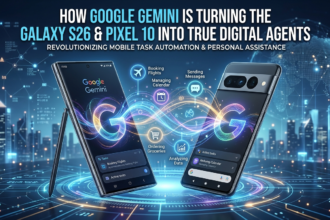
This pervasive AI will manifest in profoundly personalized experiences. Imagine a smartphone that truly understands your habits, preferences, and context. It will proactively suggest the optimal route based on your calendar and real-time traffic, pre-load apps you’re likely to use at certain times of the day, or even subtly adjust notification settings to minimize interruptions during focused work.
Artificial Intelligence
will transform the interface itself, with adaptive UIs that learn and evolve with user behavior, dynamically re-arranging widgets, app shortcuts, and information display to suit the current activity or environment.
Photography and videography, already heavily reliant on computational imaging, will reach new heights. AI will move beyond simply stitching together multiple exposures or recognizing scenes. Generative AI will allow for seamless object removal, sophisticated background replacements, and even stylistic transfers in real-time. Expect cameras to anticipate action, automatically capture the perfect shot, and offer cinematic stabilization that makes professional-grade footage achievable by anyone. Advanced semantic understanding will enable complex video editing tasks with simple voice commands, transforming raw footage into polished content in moments.
Furthermore, AI will play a pivotal role in proactive health and wellness. Integrated sensors, combined with on-device AI, will continuously monitor biometric data – heart rate variability, sleep patterns, stress levels, and even early indicators of illness through subtle changes in voice or facial expressions. Instead of just presenting data, the smartphone will offer personalized insights, behavioral nudges, and even connect users directly with healthcare professionals or provide relevant information based on their health profile. This blend of passive monitoring and active intervention through
Artificial Intelligence
will elevate the smartphone to a powerful tool for personal well-being.
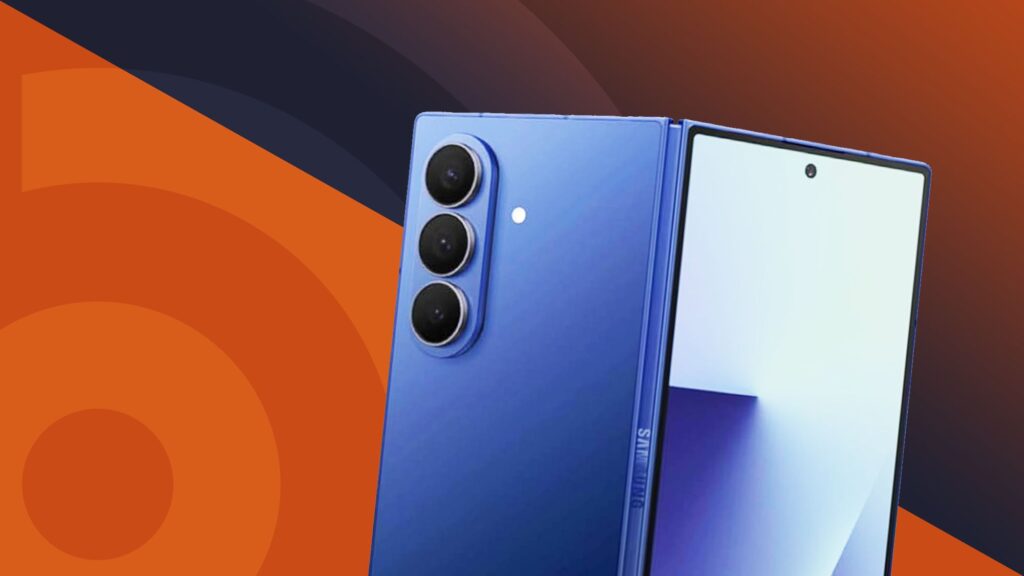
### Foldables Come of Age: Form Factors Redefined
The initial iterations of
Foldable Screens
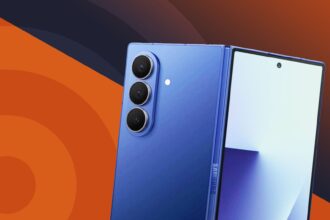
were met with a mix of awe and skepticism, plagued by concerns over durability, crease lines, and high price points. By 2026, these early challenges will largely be overcome, pushing foldables from a niche luxury to a significant segment of the premium smartphone market. Improvements in hinge mechanisms will minimize visible creases, while advanced ultra-thin glass (UTG) and new polymer materials will offer significantly enhanced display durability, making them as robust as traditional flagships.
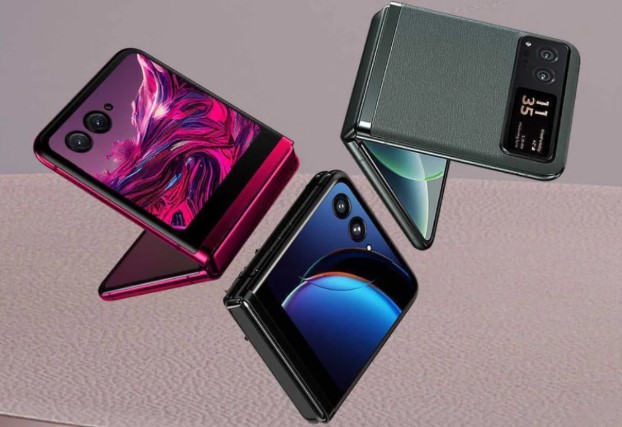
The true revolution in foldables by 2026 will be the diversification of form factors. Beyond the popular fold-in-half and flip designs, we can expect to see more exotic concepts transitioning into reality. Multi-fold devices that offer even larger screen real estate, rollable screens that unfurl from a compact tube, and even stretchable displays that adapt their shape for specific interactions are likely to emerge. This will redefine the very concept of a smartphone, offering unparalleled versatility.
The software ecosystem will have matured considerably to fully leverage these dynamic screen real estates. Operating systems will be inherently optimized for fluid transitions between folded and unfolded states, enabling seamless multi-tasking, intuitive split-screen experiences, and context-aware app layouts. Imagine starting an email on a compact outer screen and effortlessly expanding it to a tablet-sized inner display for more detailed work, with all your applications adapting instantly. Gaming will become more immersive, and content consumption will be revolutionized by larger, uncompromised viewing areas.
Accessibility will also improve. While still premium, the manufacturing processes for
Foldable Screens
will have become more efficient, leading to a gradual but noticeable decrease in their price points. This will make them more attainable for a broader segment of consumers, further solidifying their place in the mainstream and influencing overall
Smartphone Trends
. The unique capabilities of foldables will not only enhance productivity but also unlock new possibilities for creative expression and unique photographic perspectives, using the folding mechanism as an integrated tripod or viewfinder.
### Beyond the Horizon: Emerging Technologies & User Experience
While AI and foldables represent significant leaps, 2026 will also witness a convergence of other cutting-edge technologies that redefine the smartphone experience:
1. Sustainable Tech & Ethical Manufacturing:
The growing global awareness of environmental impact will profoundly influence smartphone design and production. By 2026,
Sustainable Tech
will be a significant selling point, moving beyond mere marketing. This includes widespread adoption of modular designs, allowing users to easily repair or upgrade components like batteries, cameras, or even processor modules, significantly extending device lifespans and combating e-waste. Expect to see smartphones made from a much higher percentage of recycled materials, with biodegradable components where feasible. Manufacturers will face increasing pressure for transparent supply chains, ensuring ethical sourcing of minerals and fair labor practices. Energy efficiency will be paramount, extending battery life not just through larger capacities but through optimized software and hardware that sips power.
2. Blazing Fast Charging & Battery Innovation:
The quest for everlasting power continues, and 2026 will bring revolutionary advancements in
Fast Charging
and battery technology. We’re talking about charging speeds that can top up a device from 1% to 100% in a matter of minutes, not hours, often surpassing current wired charging speeds with advanced wireless solutions that can power devices over short distances. Beyond just speed, battery density will increase significantly through technologies like solid-state batteries or silicon anode improvements, offering longer overall battery life in the same form factor. AI will also play a crucial role in battery health management, intelligently optimizing charging cycles to prolong the battery’s lifespan over years.
3. Advanced Connectivity & Ecosystem Integration:
While 5G will be mature, 2026 will see early explorations or even initial deployments of 6G research, pushing data speeds to unprecedented levels and enabling truly instantaneous communication. Satellite connectivity, currently a niche emergency feature, will become more widespread, offering basic communication capabilities in remote areas without traditional cellular service. The smartphone’s role as the central hub of a vast ecosystem will be reinforced. Deep integration with AR/VR headsets (which themselves will be much more compact and powerful), smart home devices, wearables, and even vehicles will be seamless, allowing for unified control and data exchange across all personal tech.
4. Enhanced Security & Privacy:
As smartphones become more central to our lives and handle sensitive data, security and privacy will be paramount. Hardware-level security, with dedicated secure enclave chips, will become standard, offering robust protection against sophisticated threats. Biometric authentication will advance beyond simple fingerprint scanners and face unlock, potentially incorporating under-display multi-fingerprint scanning or even gait analysis. AI will constantly monitor for unusual activity, offering real-time threat detection. Users will also have unprecedented granular control over their data, with transparent dashboards detailing exactly how their information is used and the ability to easily revoke permissions.
5. Immersive Interfaces & Sensory Feedback:
Beyond touch and voice, future smartphones will explore more immersive ways to interact. Advanced haptic feedback systems will deliver incredibly nuanced and realistic tactile sensations, making virtual textures feel real or providing distinct feedback for different notifications. While full holographic displays might still be a few years off, early integrated micro-projectors or sophisticated light-field displays could offer unique visual experiences, particularly for shared content or AR overlays. Research into subtle Brain-Computer Interface (BCI) elements might begin to surface in niche applications, allowing for basic device control through thought, though this would remain highly experimental by 2026.
### Challenges and Considerations
Despite this exhilarating vision, the future of smartphones in 2026 is not without its challenges. The drive for continuous innovation must be balanced with cost considerations to avoid widening the digital divide. The ethical implications of pervasive AI, particularly concerning data privacy, algorithmic bias, and potential for manipulation, will require careful regulation and transparent development. E-waste, despite efforts in
Sustainable Tech
, will remain a significant concern given the sheer volume of devices produced globally. Manufacturers and users alike must commit to responsible consumption and disposal.
### Conclusion
The smartphone of 2026 will be a testament to relentless . It will be a device where
Artificial Intelligence
transforms every interaction into a personalized, proactive experience, where
Foldable Screens
offer unprecedented versatility in form and function, and where
Sustainable Tech
guides design principles. More than just a tool, it will evolve into an ultra-intelligent, deeply integrated personal companion that anticipates our needs, protects our privacy, and connects us to the digital and physical worlds with seamless efficiency. The coming years promise a truly transformative era for these devices, cementing their role as the most crucial piece of technology in our daily lives, far
beyond
what we can fully comprehend today.